



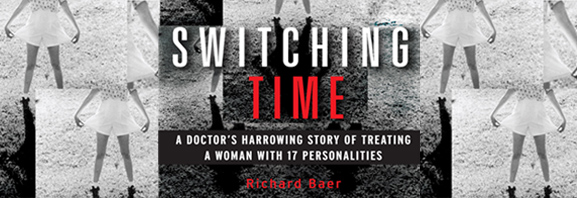

Karen answers Whitney
Richard Baer on Sep 8th 2011
Comment by Whitney on 28 Mar 2011 at 6:35 am
Ms. Karen,
Hello! I am a Masters in Community Counseling student at George Mason University. We were assigned to read a memoir or true story regarding someone’s struggle with a mental disorder or illness.
Your book struck me. It was beautiful, filled with hope, and painful to read. My heart goes out to you for what you have experienced and how strong you are to work towards overcoming it all.
My question is- what type of “things” do you think those up-and-coming in the therapy profession would know/do differently when working with someone who has DID/ Multiple personalities?
Thanks so much! I am looking forward to sharing your story with my classmates.
Whitney
Dear Whitney,
Thank you for your kind and heartfelt thoughts and compliments! I’m touched to know my story made a difference to you. It’s my desire to encourage hope through sharing my story. If I’m able to help in the smallest way, I will. There have been times during my therapy years when I wished to gain knowledge and understanding of why I felt the way I did. I was fortunate to have Dr. Baer’s confidence in treating me and his wholehearted and unconditional care. We made a great team, and it most certainly was teamwork at it’s best.
To answer the second part of your question I would say as a new therapist you should strive to be consistent, take your time, set clear boundaries, especially with touch. Dr. Baer learned a lot as my therapy progressed. You will learn as you go…each person is unique. In my opinion, all relationships must be treated with compassion, respect, and safety. Reality may appear different for a multiple, but in the end, reality is simply shedding old false beliefs and being realistic.
During my therapy, the one thing I would fantasize I would change was not being hugged by Dr. Baer. The lack of a hug caused me unnecessary grief. There was a time when I felt un-worthy, disgusting, and my self-esteem felt contaminated. I had never been hugged by my father or mother. I felt ashamed for wanting and needing to be hugged. But I learned that Dr. Baer’s not hugging me was more about him than me, and more about my alters’ needs for discipline and growth. It was all about being consistent and setting boundaries. I accepted and respected Dr. Baer for sticking to his principles. That’s how I came to learn trust.
I believe it’s best not to repeatedly hug, but I see no reason to withhold an occasional safe hug. We are all human, right? Than again, I’m not therapist. In my opinion, there needs to be mutual agreement and only the therapist and patient can decide what’s best for both. With me and Dr, Baer, there was no hug until the end. That worked for us. We built a trustworthy relationship.
Wishing you all my best on your Master’s. I would love to hear how sharing my story with your classmates goes!
Karen
Hi Karen,
I just finished reading your book (and having an epiphany as a result, thank you!) and wanted to comment on your thoughts about hugs. I have been on a similar journey, discovering along the way two or three repressed persons who ultimately integrated (although I can still converse with the girls if I need to). My first therapist (15 years) was a “no-touch” psychiatrist, but while never being touched caused me pain, it did not protect my boundaries; she ended up terminating me with no explanation after acting like an old intimate friend at a community meeting! Years before that, I had figured out I was molested by my mother, and told and wrote her the details about it, but she was so hooked on her own idea of me, she denied the molestation: “Mothers don’t do that!” she said. So it’s a good thing she dumped me because otherwise I’d still probably be writing her worshipful letters.
My second therapist (whom I was also with for about 15 years) is a woman with boundaries of steel. Part of her therapy was “reparenting”, giving me a way to imagine and really experience being loved. Part of that therapy was appropriate hugs, and there were times when she held me in her lap and I cried on her shoulder. This was on my request because I felt safe with her. This experience felt really great, but it also helped me realize that it would not fill the holes I had from childhood. Those potholes are still there, but they’ve been thoroughly explored. In some cases, I’ve paved them over, and in other cases I avoid the streets that contain them!
So I agree with your wish for an appropriate hug. Lack of hugs doesn’t guarantee good boundaries, and the presence of hugs doesn’t have to work against good boundaries IF the therapist is truly whole and integrated herself (or himself), and IF the therapist is comfortable with using that as a healing modality.
I have written a memoir (based on 17 volumes of single-space typed journals) and revised it ad nauseum. I think your book will give me a way to finally make the last chapter work. You are fortunate to find publication — I haven’t managed that yet! It seems no one wants to read about molesting mothers’!
Best of luck in the future. From reading about you in the book, I think you are a brave and amazingly resourceful woman with many talents.
Linda